We visited two exceptional farms in São Paulo's Alta Mogiana region — a journey that deepened our commitment to the people and land behind every bag we roast.
São Paulo's Alta Mogiana region sits at altitude in the north of the state, far from the city. The air is clear, the farms are large, and the families who run them have been doing so for generations. We travelled there to meet two producers whose coffees we've been proud to carry — and to understand, first hand, what it takes to grow something exceptional.
Fazenda Bom Jesus
Owned by Gabriel and Flavia Lancha de Oliveira, Fazenda Bom Jesus sits at 1,270 metres in the Alta Mogiana. The farm grows Mundo Novo and Yellow Catuai using natural processing — a method that produces the deep, fruit-forward sweetness the region is known for.
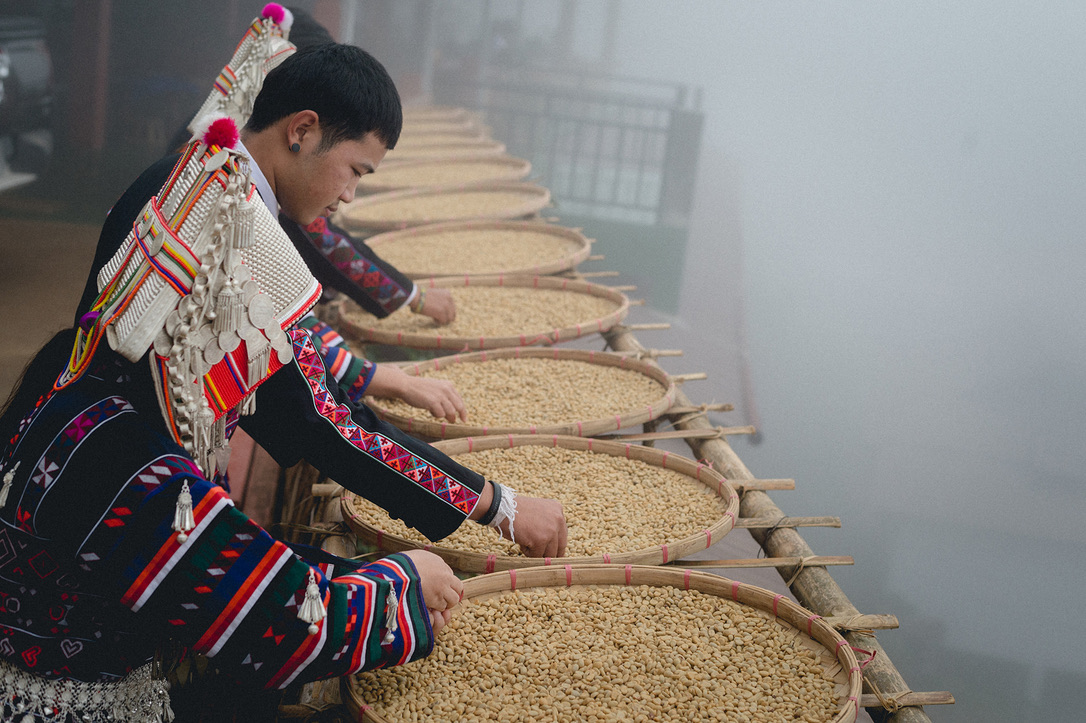
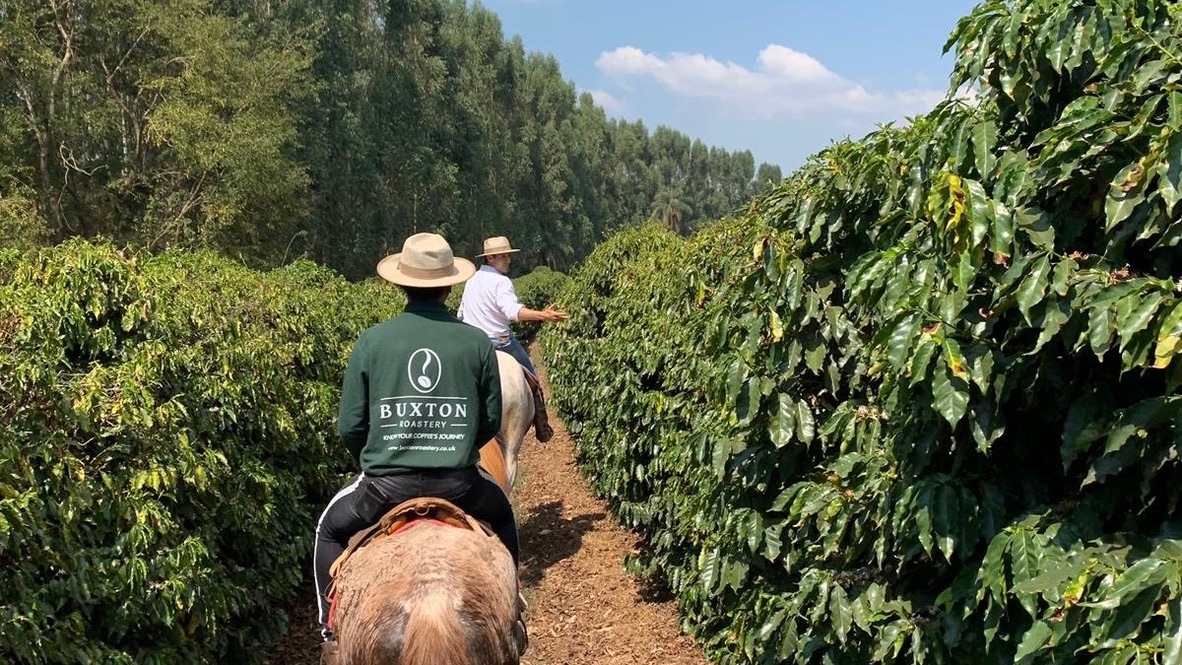
The Oliveira family represents generations of coffee heritage. Their children are now actively involved in managing the operation, and it shows in the way the farm is run: purposefully, carefully, with a long-term view. Gabriel Jr. took us on horseback through the farm — past irrigation systems, processing infrastructure, and the drying terraces where the coffee is laid out under the sun.
The farm's approach to its workforce is equally considered. All staff are required to be literate and receive specialist agricultural training. Children of farm workers attend a school on site. It's the kind of detail that doesn't show up in a tasting note, but shapes everything about why coffee from this place has a particular quality.
Terra Preta
Our second visit was to Terra Preta, operated by Fernanda Maciel Raucci and her son Felipe — the fourth generation of their family to farm this land. The farm has won the Cup of Excellence in both 2016 and 2017, and standing on the terraces at 1,090 metres it's easy to understand why.
Felipe was candid about pricing. "What we are doing is respecting the farmer by asking a specific price," he told us — not one dictated by commodity benchmarks or fair-trade floors, but one that reflects the genuine skill and craft involved in producing speciality-grade coffee. It's a philosophy we share entirely.
The farm blends traditional methods with modern agricultural technology — a balance that's difficult to strike and harder to maintain. Felipe's pride in it was evident, and his willingness to discuss the economics of farming openly was something we valued.
The Journey to Your Cup
From the farms at Pedregulho, the coffee travels to Santos Port for shipment. We visited the Museum of Coffee in São Paulo's historic Bolsa Oficial do Café district — a reminder of how deeply the country's identity is bound up in this crop, and how much craft has been accumulated over generations.
Every bag of Brazilian coffee we roast in Buxton carries that journey with it. The altitude, the family, the decision to do things properly rather than at scale. We're grateful to have seen it ourselves.